7-Day Diet Plan for Weight Loss: Healthy Meal Plan & Tips, A Simple Guide to Healthy Eating
Losing weight is a common goal for people who want to improve their overall health, feel more energetic, or develop healthier daily habits. While dramatic weight loss in just a few days is generally unrealistic for most people, a structured 7-day diet plan for weight loss can be a useful way to begin making better food and lifestyle choices.
A short-term plan should not involve starvation or extreme calorie restriction. Instead, it should emphasize nutritious foods, adequate protein, vegetables, whole foods, hydration, physical activity, and consistent sleep.
In this guide, you’ll find a simple 7-day weight-loss meal plan, foods to include, exercise ideas, common mistakes to avoid, and practical tips for creating sustainable habits.
Important: Losing 5 kg in 7 days is not a realistic or appropriate target for most people. Rapid changes on the scale can include water and glycogen loss rather than body fat. Healthy weight loss is usually gradual, and individual results vary.
🔥 Explore a Weight-Loss Supplement
If you’re considering a dietary supplement, research its ingredients, safety information, and evidence carefully before purchasing. Supplements should complement—not replace—a nutritious diet and active lifestyle.

Why Follow a 7-Day Diet Plan?
Starting with a one-week plan can make healthy eating easier because it provides structure and removes some of the guesswork from meal planning.
A balanced diet can help you:
- Control overall calorie intake
- Increase your intake of vegetables and fruit
- Eat more protein and fiber
- Reduce highly processed foods
- Cut back on added sugar
- Develop consistent meal habits
- Stay hydrated
- Build a foundation for long-term healthy eating
The goal isn’t to eat as little as possible. Instead, focus on meals that provide nutrients and help you stay satisfied throughout the day.
Morning Routine for Weight Loss
Your morning routine can help establish healthy habits for the rest of the day.
Try starting your morning with:
1. Water
Drink water after waking up to help maintain normal hydration.
2. A nutritious breakfast
Choose a meal containing protein, fiber, and minimally processed carbohydrates.
3. Light movement
A short walk, gentle stretching, or another activity you enjoy can help you become more active.
4. Limit sugary drinks
Choose water, unsweetened tea, or another low-calorie beverage instead of sugar-heavy drinks.
Tip: Lemon water can be refreshing, but it isn’t a special fat-burning drink. Its main benefit is that it can make water more enjoyable to drink.
💪 Start Building Healthier Habits
7-Day Diet Plan for Weight Loss
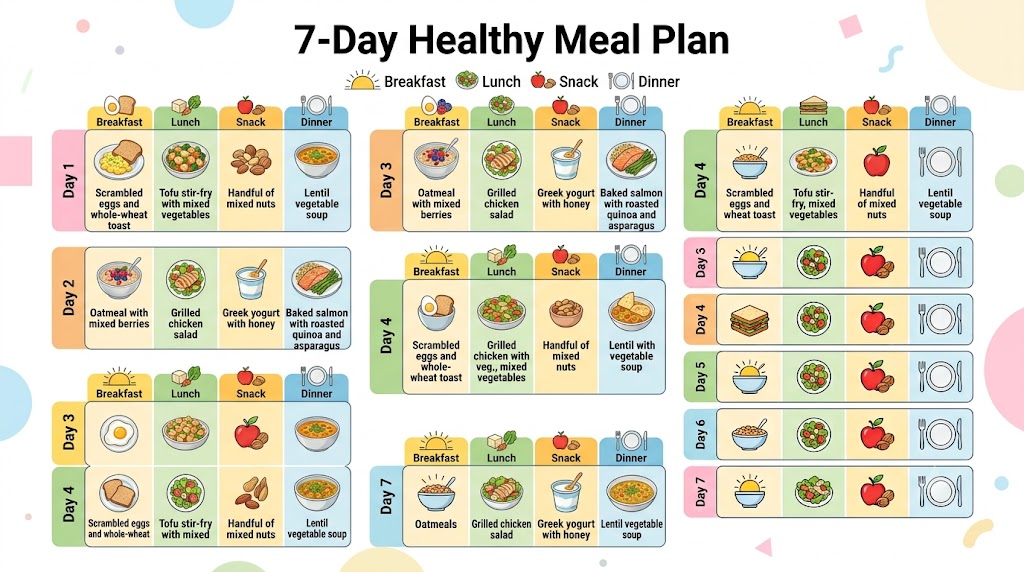
Here’s a flexible meal structure you can adapt to your preferences, dietary needs, and calorie requirements.
Day 1
Breakfast:
- 2–3 boiled eggs
- One piece of fruit
- Unsweetened green tea or water
Lunch:
- Grilled chicken, tofu, or another lean protein
- Large vegetable salad
- Small serving of brown rice
Snack:
- A small handful of nuts
- Water or unsweetened tea
Dinner:
- Vegetable soup
- Grilled protein
- Steamed vegetables
Day 2
Breakfast:
- Oatmeal with berries or an apple
- Greek yogurt or another protein source
Lunch:
- Grilled chicken or tofu
- Mixed vegetables
- Small serving of quinoa or brown rice
Snack:
- Fruit
- A small handful of nuts
Dinner:
- Vegetable soup
- Lentils or another protein-rich food
- Salad
Day 3
Breakfast:
- Eggs with vegetables
- Whole-grain toast
- Water or unsweetened tea
Lunch:
- Chicken, fish, beans, or tofu
- Large salad
- Small portion of whole grains
Snack:
- Apple or berries
- Plain yogurt
Dinner:
- Oatmeal or quinoa
- Steamed vegetables
- Lean protein
Day 4
Breakfast:
- Oatmeal with fruit
- Plain yogurt or eggs
Lunch:
- Grilled protein
- Mixed vegetable salad
- Brown rice or quinoa
Snack:
- Fruit and a few nuts
Dinner:
- Vegetable soup
- Beans, tofu, chicken, or fish
- Leafy greens
Day 5
Breakfast:
- 2–3 eggs
- Fruit
- Unsweetened green tea
Lunch:
- Grilled chicken or tofu salad
- Small serving of whole grains
Snack:
- Plain yogurt
- Berries or another fruit
Dinner:
- Steamed vegetables
- Lean protein
- Small serving of quinoa
Day 6
Breakfast:
- Oatmeal with berries
- Eggs or Greek yogurt
Lunch:
- Grilled fish, chicken, tofu, or beans
- Large vegetable salad
- Brown rice
Snack:
- Apple
- Small handful of almonds or other nuts
Dinner:
- Vegetable soup
- Lean protein
- Mixed vegetables
Day 7
Breakfast:
- Vegetable omelet
- Whole-grain toast
- Fruit
Lunch:
- Grilled chicken, fish, tofu, or beans
- Large salad
- Small portion of brown rice
Snack:
- Fruit
- Plain yogurt or nuts
Dinner:
- Vegetable soup
- Lean protein
- Steamed vegetables
Best Foods to Include in a Weight-Loss Diet
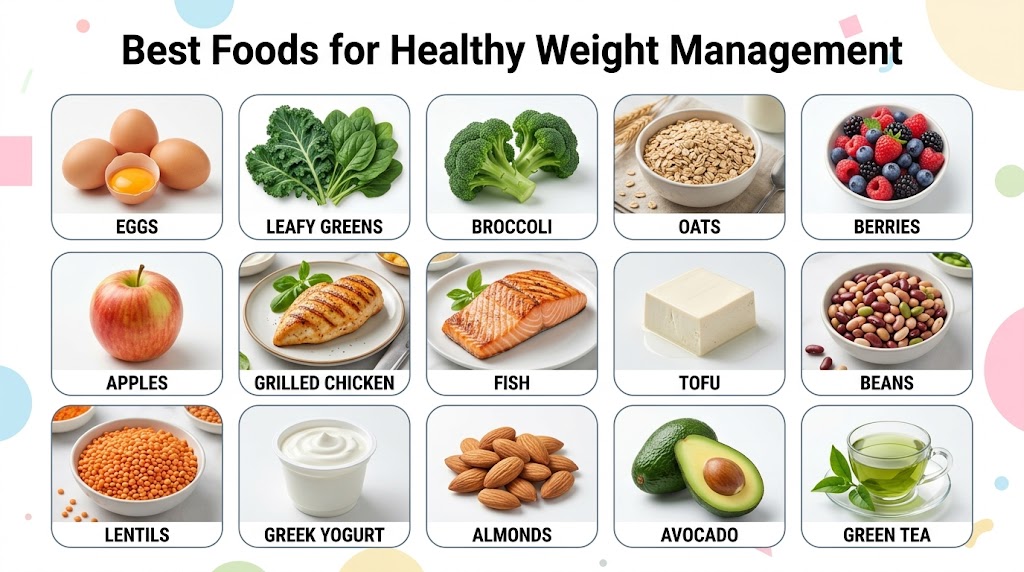
There isn’t one food that automatically makes your body “burn fat.” However, some foods can make a balanced weight-management diet easier because they provide protein, fiber, vitamins, minerals, and other nutrients.
🥚 Eggs
Eggs provide protein and can be incorporated into breakfast or other meals.
🥦 Leafy and Green Vegetables
Vegetables such as spinach, broccoli, cucumber, lettuce, and green beans provide fiber and nutrients while generally being relatively low in calories.
🌾 Oats
Oats provide carbohydrates and fiber and can be combined with fruit, yogurt, nuts, or other nutritious ingredients.
🍗 Lean Protein
Chicken, fish, eggs, tofu, beans, lentils, and other protein sources can help make meals more filling.
🍎 Fruits
Apples, berries, oranges, and other whole fruits provide fiber and naturally occurring nutrients.
🥜 Nuts
Nuts contain healthy fats and protein, but portions matter because they are relatively calorie-dense.
🍵 Green Tea
Unsweetened green tea can be a low-calorie beverage option. It shouldn’t be considered a substitute for a balanced diet or exercise.
KeySlim Drops: A Supplement to Consider Alongside a Healthy Routine
If you’re looking for additional support while following a healthy eating and exercise routine, you may also come across KeySlim Drops. KeySlim Drops is a liquid dietary supplement marketed toward adults who are interested in weight management and maintaining a healthy lifestyle.
Rather than viewing a supplement as a replacement for a nutritious diet, it can be considered as an optional addition to a broader wellness routine that includes balanced meals, regular physical activity, adequate hydration, and good sleep.


How to Use KeySlim as Part of a Healthy Routine
A practical approach is to focus on your everyday habits first:
- Follow a balanced meal plan with vegetables, protein, fruits, and whole foods.
- Stay adequately hydrated throughout the day.
- Include regular walking or other physical activity.
- Maintain a consistent sleep schedule.
- Follow the product’s current label directions if you choose to use KeySlim Drops.
- Avoid relying on supplements as a substitute for meals or healthy lifestyle habits.
KeySlim Drops Review
If you’re considering KeySlim Drops, it’s worth looking at the current product information, ingredients, suggested use, pricing, and refund policy before making a purchase. Individual experiences with dietary supplements can vary, and a supplement should not be expected to produce a specific amount of weight loss in a particular period.
👉 Read our complete KeySlim Drops Review to learn more about the product and what to consider before buying.
A Realistic Approach to Weight Management
A product such as KeySlim Drops should be viewed as only one part of a larger lifestyle strategy. The foundation of a weight-management routine remains a nutritious diet, appropriate calorie intake, physical activity, sleep, and consistency.
If you have a medical condition, take medication, or have specific dietary requirements, consider speaking with a qualified healthcare professional before starting a new dietary supplement.
Read Full review of Keyslim drops Click Here
Exercise to Support Weight Loss
Diet is only one part of a healthy weight-management routine. Regular physical activity can help increase energy expenditure, improve fitness, and support overall health.
If you’re new to exercise, start gradually.
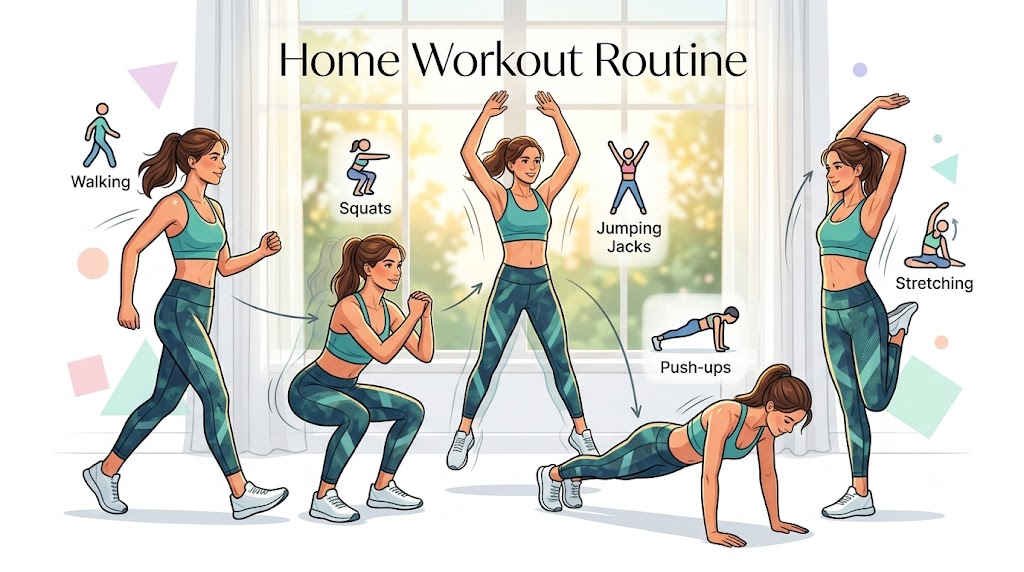
Simple activities to try:
- 20–30 minute walks
- Bodyweight squats
- Wall push-ups or regular push-ups
- Light stretching
- Dancing
- Cycling
- Beginner strength exercises
You don’t need an extreme workout to get started. Consistency is usually more useful than doing a very difficult workout occasionally.
Common Weight-Loss Mistakes to Avoid
1. Skipping Meals
Skipping meals isn’t necessary for weight loss and may make it harder for some people to maintain a balanced eating pattern.
2. Eating Too Many Processed Foods
Highly processed foods can be convenient, but regularly consuming foods high in added sugar, refined carbohydrates, sodium, or calories can make healthy weight management more difficult.
3. Drinking Too Many Sugary Beverages
Sodas, sweetened coffees, energy drinks, and other sugary beverages can add substantial calories without providing much satiety.
4. Following Extremely Restrictive Diets
Very restrictive diets can be difficult to maintain and may not provide adequate nutrition.
5. Ignoring Sleep
Sleep is an important part of overall health and can influence appetite, energy, and daily activity.
Tips for Healthy Weight Loss
For a sustainable approach, focus on habits you can continue beyond seven days.
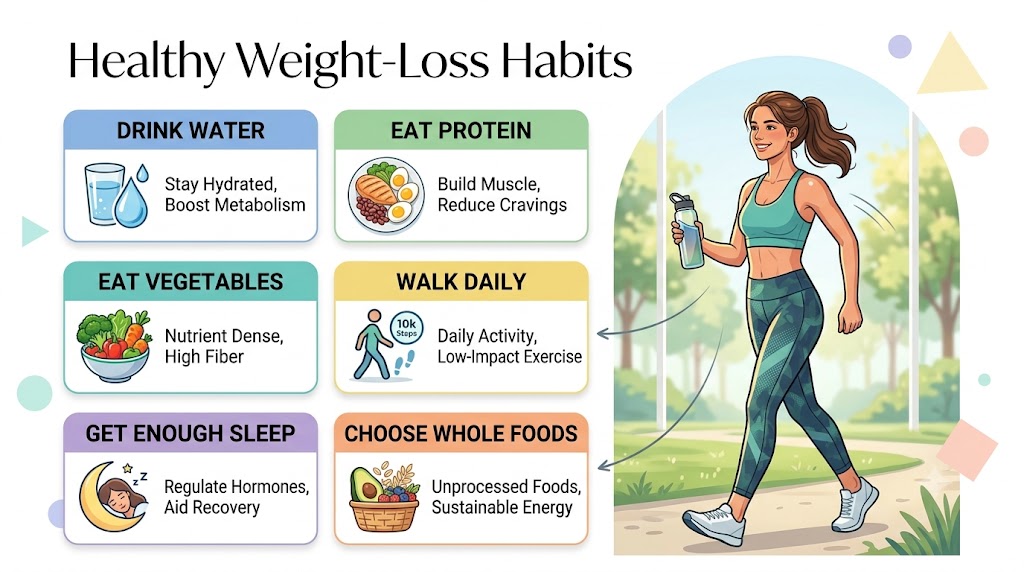
Drink Enough Water
Stay adequately hydrated throughout the day. Individual fluid needs vary based on factors such as activity level, climate, and overall health.
Prioritize Protein
Include a protein source in your meals, such as eggs, fish, chicken, tofu, beans, lentils, or yogurt.
Eat More Vegetables
Try filling a substantial portion of your main meals with vegetables.
Choose Whole Foods More Often
Build meals around vegetables, fruits, whole grains, protein sources, and healthy fats.
Stay Active
Walking regularly is a simple way to increase daily movement.
Get Enough Sleep
Create a consistent sleep schedule and aim for adequate sleep.
Watch Portion Sizes
Even nutritious foods can contribute significant calories when eaten in very large portions.
Can You Lose 5 kg in 7 Days?
The idea of losing 5 kg in 7 days may sound attractive, but it is not a realistic fat-loss target for most people.
Your body weight can change quickly because of fluctuations in water, glycogen, food volume, and other factors. A large drop on the scale over a few days therefore doesn’t necessarily mean an equivalent amount of body fat has been lost.
Rather than focusing on a specific number within seven days, use the week to establish habits such as:
- Eating balanced meals
- Reducing highly processed foods
- Drinking enough water
- Increasing daily movement
- Getting adequate sleep
- Maintaining a reasonable calorie intake
These habits can provide a stronger foundation for long-term weight management.
Frequently Asked Questions
What is the best 7-day diet plan for weight loss?
A useful 7-day diet plan should include vegetables, fruits, protein, whole grains, healthy fats, and adequate hydration while keeping overall calorie intake appropriate for the individual.
Can I lose weight in one week?
It is possible for body weight to decrease over one week, but the amount varies significantly between individuals. Some of the initial change can come from water and glycogen rather than body fat.
What should I eat for breakfast when trying to lose weight?
Protein- and fiber-containing options such as eggs with vegetables, oatmeal with fruit and yogurt, or plain Greek yogurt with berries can make nutritious breakfast choices.
Is green tea good for weight loss?
Unsweetened green tea is a low-calorie beverage and can fit into a healthy diet. However, it shouldn’t be viewed as a magic fat-burning solution.
How much water should I drink for weight loss?
There is no single amount that works for everyone. Hydration needs depend on factors such as body size, activity, temperature, diet, and health status. Drink regularly throughout the day and increase intake when appropriate.
Final Thoughts
A 7-day diet plan for weight loss can be a helpful starting point for developing healthier eating and activity habits. Instead of chasing extreme results, concentrate on nutritious meals, adequate protein, vegetables, hydration, regular movement, and good sleep.
Most importantly, remember that weight management is a long-term process. Your results can vary depending on your starting point, lifestyle, calorie intake, activity level, and other individual factors.
Start with small, realistic changes that you can maintain after the seven days are over.