
Is Eating Too Little Food Bad for Weight Loss?
Many people believe that the fastest way to lose weight is to eat as little as possible. It seems logical: if eating fewer calories helps you lose weight, then eating almost nothing should work even better.
Unfortunately, weight loss isn’t that simple.
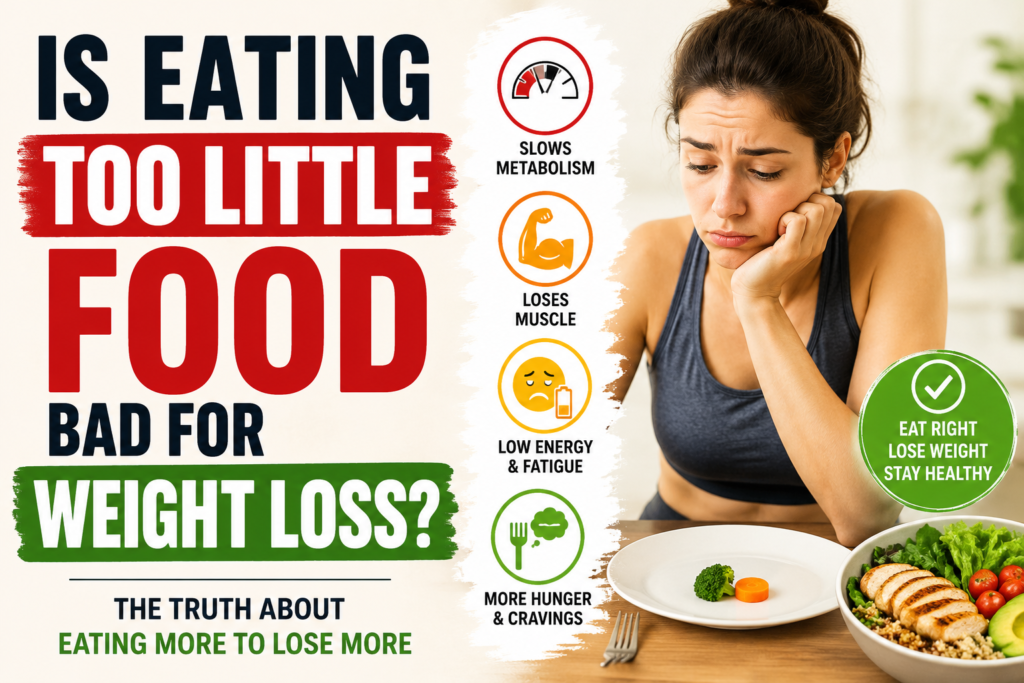
While creating a calorie deficit is necessary for fat loss, eating too little food can actually make healthy, sustainable weight loss more difficult. Extremely low-calorie diets may leave you constantly hungry, reduce your energy levels, increase the risk of nutrient deficiencies, and make it harder to maintain muscle mass. Over time, they can also become difficult to stick with, leading many people to regain weight.
In this article, we’ll explore why eating too little can work against your goals and how to lose weight in a healthier, more sustainable way.Is Eating Too Little Food Bad for Weight Loss?
Many people believe that the fastest way to lose weight is to eat as little as possible. It seems logical: if eating fewer calories helps you lose weight, then eating almost nothing should work even better.
Unfortunately, weight loss isn’t that simple.
While creating a calorie deficit is necessary for fat loss, eating too little food can actually make healthy, sustainable weight loss more difficult. Extremely low-calorie diets may leave you constantly hungry, reduce your energy levels, increase the risk of nutrient deficiencies, and make it harder to maintain muscle mass. Over time, they can also become difficult to stick with, leading many people to regain weight.
In this article, we’ll explore why eating too little can work against your goals and how to lose weight in a healthier, more sustainable way.
Table of Contents
What Happens When You Eat Too Little?
When you eat far fewer calories than your body needs, it begins conserving energy.
Your body still needs fuel for essential functions like:
- Breathing
- Circulation
- Digestion
- Brain function
- Hormone production
- Cell repair
If energy intake stays very low for an extended period, your body adapts in ways that can make dieting feel harder.
Some common effects include:
- Constant hunger
- Fatigue
- Reduced exercise performance
- Difficulty concentrating
- Increased cravings
- Mood changes
These changes can make it much harder to stay consistent with healthy habits.
Can Eating Too Little Slow Weight Loss?
One of the biggest myths is that eating less always means losing more weight.
Initially, very low-calorie diets often lead to rapid weight loss, but much of that early loss can come from water and glycogen stores rather than body fat.
Over time, several factors may make progress more challenging:
1. Increased Hunger
When calories are very restricted, many people experience stronger hunger and cravings, making overeating more likely later.
2. Reduced Daily Activity
Without enough energy, you may naturally move less throughout the day.
Simple activities like walking, climbing stairs, or even standing can decrease, reducing the number of calories you burn.
3. Harder Workouts
Exercise becomes more difficult when your body lacks fuel.
Lower workout quality may reduce your ability to maintain strength and muscle during weight loss.
4. Difficulty Following the Diet
Perhaps the biggest challenge is sustainability.
A diet that leaves you exhausted and hungry is much harder to maintain than one that provides enough energy while still creating a moderate calorie deficit.
Signs You’re Not Eating Enough
Here are some common signs that your calorie intake may be too low:
- You’re hungry all day.
- You feel tired most of the time.
- Your workouts are getting worse.
- You constantly think about food.
- You experience frequent cravings.
- You feel cold more often.
- You’re becoming irritable.
- You’re losing strength.
- Your weight loss has stalled despite strict dieting.
If several of these apply to you, it may be worth reviewing your calorie intake with a qualified healthcare professional or registered dietitian.
Why Muscle Matters During Weight Loss
Many people focus only on the number on the scale.
However, maintaining muscle is an important part of healthy weight loss.
Muscle helps:
- Support strength
- Improve physical function
- Contribute to daily energy expenditure
- Enhance body composition
When calorie intake and protein intake are both too low—especially without resistance training—there is a greater risk of losing muscle along with fat.
A better strategy is to combine:
- Adequate protein
- Strength training
- A moderate calorie deficit
This approach helps preserve lean mass while losing fat.
How Much Should You Eat to Lose Weight?
There isn’t one calorie target that works for everyone.
Your needs depend on factors such as:
- Age
- Sex
- Height
- Weight
- Activity level
- Health conditions
- Weight-loss goals
For many people, aiming for a moderate calorie deficit is more sustainable than extreme restriction.
Instead of trying to eat as little as possible, focus on building meals that are satisfying, nutritious, and support long-term consistency.
Best Foods for Healthy Weight Loss
Choosing filling, nutrient-rich foods can make it easier to stay in a calorie deficit without feeling deprived.
Lean Protein
Examples include:
- Chicken breast
- Fish
- Eggs
- Greek yogurt
- Cottage cheese
- Tofu
- Lentils
Protein helps support fullness and muscle maintenance.
High-Fiber Vegetables
Fill your plate with vegetables like:
- Broccoli
- Spinach
- Cauliflower
- Carrots
- Bell peppers
- Cabbage
Fiber adds volume to meals while keeping calories relatively low.
Whole Grains
Good options include:
- Oats
- Brown rice
- Quinoa
- Whole wheat bread
Whole grains provide fiber and steady energy.
Healthy Fats
Include moderate portions of:
- Avocados
- Nuts
- Seeds
- Olive oil
Healthy fats contribute to satiety and overall nutrition.
Fruit
Fresh fruit offers vitamins, minerals, fiber, and natural sweetness.
Great choices include:
- Apples
- Berries
- Oranges
- Pears
- Kiwi
Common Weight Loss Mistakes
Many people unknowingly make these mistakes:
Skipping meals
Skipping meals may increase hunger later in the day, making overeating more likely.
Cutting all carbohydrates
Carbohydrates provide energy and can be part of a balanced diet.
Avoiding all fats
Healthy fats support many normal body functions and can help meals feel more satisfying.
Ignoring sleep
Poor sleep has been linked to increased hunger and reduced diet adherence.
Aim for 7–9 hours of quality sleep each night.
Expecting instant results
Healthy weight loss takes time.
Slow, consistent progress is generally easier to maintain than rapid weight loss.
Healthy Weight Loss Tips
For sustainable results:
- Eat enough protein at each meal.
- Include vegetables with most meals.
- Stay hydrated.
- Walk daily.
- Strength train 2–4 times per week if appropriate.
- Get enough sleep.
- Manage stress.
- Track progress beyond the scale, such as energy, strength, and waist measurements.
Frequently Asked Questions
Is eating too little food bad for weight loss?
It can be. While reducing calories is necessary for weight loss, eating far too little may increase hunger, reduce energy, make it harder to exercise, and become difficult to maintain over time.
Will I lose weight faster if I eat only one meal a day?
Not necessarily. Total calorie intake, diet quality, and sustainability matter more than meal frequency for most people.
Can I lose fat without starving myself?
Yes. A moderate calorie deficit combined with a balanced diet and regular physical activity is generally a more sustainable approach than extreme calorie restriction.
How much protein should I eat while losing weight?
Protein needs vary by individual. Many people benefit from including a source of protein with each meal, but the right amount depends on body size, activity level, and health goals.
Why am I always hungry on my diet?
Possible reasons include:
- Eating too few calories
- Not enough protein
- Low fiber intake
- Poor sleep
- High stress
Improving meal quality and overall lifestyle habits may help.
Final Thoughts
So, is eating too little food bad for weight loss?
For many people, the answer is yes. While creating a calorie deficit is essential for losing weight, an overly restrictive diet can leave you tired, hungry, and struggling to stick with your plan. Long-term success usually comes from finding a sustainable balance rather than eating as little as possible.
Instead of chasing the lowest calorie intake, focus on nourishing your body with protein-rich foods, vegetables, whole grains, healthy fats, and regular physical activity. Combined with adequate sleep and consistency, these habits are far more likely to support lasting weight management than extreme dieting.
Scientific References
- Hall KD, et al. Energy balance and its components: implications for body weight regulation. American Journal of Clinical Nutrition.
https://academic.oup.com/ajcn/article/95/4/989/4576878 - National Institute of Diabetes and Digestive and Kidney Diseases (NIDDK). Body Weight Planner and Healthy Weight Resources.
https://www.niddk.nih.gov/health-information/weight-management - Centers for Disease Control and Prevention (CDC). Healthy Weight, Nutrition, and Physical Activity.
https://www.cdc.gov/healthy-weight-growth/ - Academy of Nutrition and Dietetics. Healthy Weight Loss Guidance.
https://www.eatright.org/health/weight-loss - World Health Organization (WHO). Healthy Diet Guidance.
https://www.who.int/news-room/fact-sheets/detail/healthy-diet
Also Read
Healthy Food Most People Think Is Unhealthy: The Truth May Surprise You
Losing Just 80 Minutes of Sleep a Night Could Make You Gain Weight, New Study Finds (2026)