
Meta Title: Losing 80 Minutes of Sleep May Cause Weight Gain, Study Finds (2026)
Meta Description: A new Columbia University study found that losing just 80 minutes of sleep each night for six weeks may lead to weight gain, increased inactivity, and a higher risk of diabetes and heart disease.
Many people sacrifice sleep to finish work, watch television, or scroll through social media, believing that losing an hour or so of sleep isn’t a big deal. However, new research suggests that even a modest reduction in sleep could have measurable effects on body weight and overall health.
Losing Just 80 Minutes of Sleep a Night Could Make You Gain Weight | HealthScapia
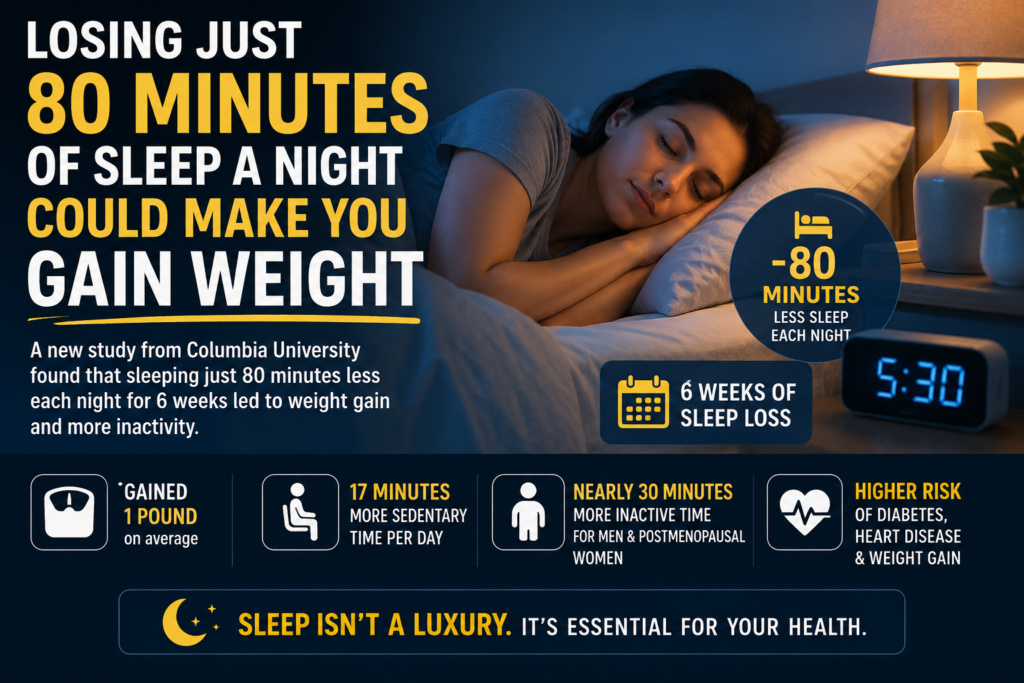
Researchers at Columbia University Irving Medical Center discovered that adults who slept about 80 minutes less each night for six weeks gained weight, became more sedentary, and showed changes linked to future chronic disease risk.
The study was published in the Annals of Internal Medicine on July 6, 2026.
Table of Contents
What the Study Found
Researchers followed 95 healthy adults who typically slept between seven and eight hours each night.
During one phase of the study, participants delayed their bedtime by approximately 90 minutes for six weeks while maintaining their normal wake-up time. During another six-week period, they followed their usual sleep schedule.
The results were clear:
- Participants gained about one pound (0.45 kg) after six weeks of reduced sleep.
- Daily sedentary time increased by an average of 17 minutes.
- Men and postmenopausal women became nearly 30 minutes more inactive each day.
- Researchers observed changes associated with an increased risk of obesity and metabolic disease.
Although a one-pound gain may appear small, scientists emphasized that the effects could become significant if poor sleep continues for months or years.
How the Research Was Conducted
Unlike previous studies that restricted sleep to only four hours per night, this research examined a more realistic pattern that millions of adults experience.
Participants wore wrist activity monitors that tracked:
- Sleep duration
- Physical activity
- Sedentary behavior
Researchers also measured:
- Body weight
- Waist circumference
- Body composition
- Appetite-related hormones
- Fasting blood markers
This design allowed scientists to observe how mild but consistent sleep loss affects everyday health.
Why Sleep Affects Weight
Sleep influences several hormones responsible for regulating hunger, metabolism, and energy balance.
When sleep is consistently reduced, the body may:
- Burn fewer calories
- Feel more fatigued during the day
- Reduce spontaneous physical activity
- Experience changes in appetite regulation
- Store more body fat over time
According to the researchers, these changes can gradually contribute to weight gain even without dramatic changes in diet.
Less Sleep Led to More Inactivity
One of the most interesting findings was that participants became less active when they slept less.
Even after accounting for the extra time they were awake, participants spent significantly more time sitting or remaining inactive.
Researchers believe fatigue caused by insufficient sleep naturally reduces motivation to exercise and perform daily activities.
This decrease in movement may partially explain why chronic sleep deprivation contributes to weight gain.
Long-Term Health Risks
The researchers also referenced previous studies involving the same participants.
Earlier investigations found that chronic mild sleep restriction was associated with:
- Increased insulin resistance
- Higher risk of type 2 diabetes
- Increased inflammation
- Elevated cardiovascular disease risk
Women with higher cardiometabolic risk, particularly postmenopausal women, experienced some of the most pronounced metabolic changes.
Although additional research is needed, the findings strengthen the growing evidence that adequate sleep is an essential part of long-term health.
Expert Insights
Study leader Marie-Pierre St-Onge, Professor of Nutritional Medicine at Columbia University, emphasized that maintaining healthy sleep habits should be considered alongside nutrition and exercise.
She noted that while eating well and staying active remain important, getting enough sleep may also play a meaningful role in preventing gradual adult weight gain.
Lead author Dr. Faris Zuraikat added that if this pattern of losing roughly 80 minutes of sleep each night continues throughout the year, the accumulated weight gain could become clinically significant.
How Much Sleep Do Adults Need?
| Age Group | Recommended Sleep |
|---|---|
| Adults (18–64 years) | 7–9 hours |
| Adults (65+) | 7–8 hours |
Consistently sleeping less than seven hours has been associated with increased risks of:
- Obesity
- Type 2 diabetes
- High blood pressure
- Heart disease
- Depression
- Reduced immune function
Tips to Improve Sleep Quality
Improving sleep doesn’t always require medication.
Consider these healthy habits:
- Maintain a consistent bedtime.
- Limit screen time before bed.
- Reduce caffeine in the evening.
- Keep your bedroom cool, quiet, and dark.
- Exercise regularly during the day.
- Avoid heavy meals close to bedtime.
- Establish a relaxing nighttime routine.
Small lifestyle changes can make a noticeable difference in sleep quality over time.
Final Thoughts
This new study highlights that even modest sleep loss may have measurable effects on body weight and daily activity levels.
While gaining one pound over six weeks may not seem alarming, the long-term consequences of chronic sleep deprivation could increase the risk of obesity, diabetes, and heart disease.
The findings reinforce an important message: quality sleep is not simply about feeling rested—it is a key component of maintaining a healthy weight and protecting long-term health.
Frequently Asked Questions
Can losing one hour of sleep really cause weight gain?
This study found that consistently losing about 80 minutes of sleep each night for six weeks resulted in an average weight gain of approximately one pound.
Why does poor sleep increase obesity risk?
Insufficient sleep can reduce physical activity, alter hunger hormones, affect metabolism, and increase sedentary behavior, all of which may contribute to weight gain.
How much sleep should adults get?
Most adults should aim for 7 to 9 hours of quality sleep each night for optimal physical and mental health.
Is one night of poor sleep harmful?
Occasional poor sleep is unlikely to cause significant weight gain, but chronic sleep deprivation over weeks or months may have meaningful health effects.
Story Source:
Materials provided by Columbia University Irving Medical Center. Note: Content may be edited for style and length.
Source
Journal: Annals of Internal Medicine (2026)
Study: Prolonged Short Sleep and Its Effect on Body Weight and Composition
DOI: 10.7326/ANNALS-25-01660