

Bad breath, medically known as halitosis, is one of the most common oral health concerns worldwide. While occasional bad breath after eating garlic or onions is completely normal, persistent bad breath can indicate an underlying oral or medical condition that requires attention.
Research suggests that nearly half of adults experience bad breath at some point, and for many people, the problem originates inside the mouth rather than the stomach. Fortunately, understanding the causes of halitosis is the first step toward improving breath and maintaining better oral health.
This evidence-based guide explains what causes bad breath, the symptoms to watch for, effective treatments, and practical ways to prevent halitosis naturally.
Table of Contents
What Is Bad Breath (Halitosis)?
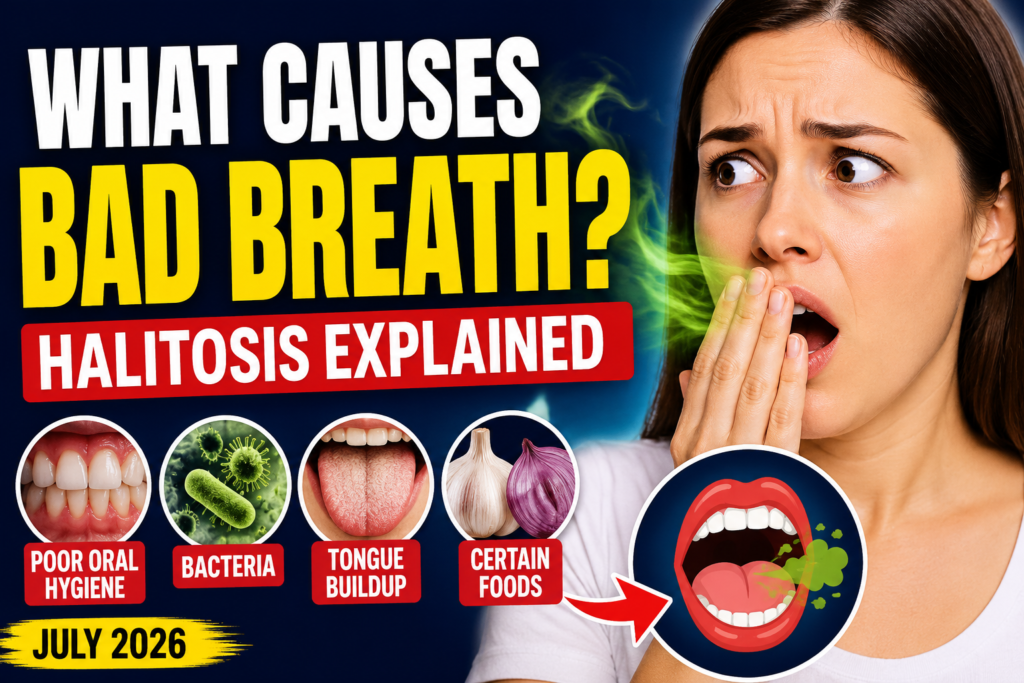
Halitosis is the medical term for an unpleasant odor coming from the mouth. It can occur temporarily after eating certain foods or become chronic due to poor oral hygiene, gum disease, dry mouth, or other health conditions.
Most persistent cases originate from bacteria living on the tongue, between teeth, and around the gums. These bacteria break down food particles and proteins, releasing volatile sulfur compounds (VSCs), which are largely responsible for unpleasant mouth odor.

How Common Is Halitosis?
Halitosis affects millions of people worldwide and is one of the leading reasons adults seek dental care after cavities and gum disease.
Studies estimate that:
- Around 30–50% of adults experience noticeable bad breath.
- Most chronic cases originate inside the mouth.
- Poor oral hygiene remains the most common cause.
- Persistent bad breath may also indicate gum disease or dry mouth.
What Causes Bad Breath?
1. Poor Oral Hygiene
When food particles remain on teeth and gums, bacteria feed on them and produce foul-smelling sulfur gases.
Without regular brushing and flossing, plaque accumulates and increases bacterial growth.
Signs include:
- Morning breath
- Plaque buildup
- Bleeding gums
- Tooth decay
2. Tongue Bacteria
The tongue, especially its rough back surface, traps bacteria, food debris, and dead cells.
This makes the tongue one of the largest sources of chronic bad breath.
Cleaning the tongue daily can significantly reduce odor-producing bacteria.
3. Gum Disease
Gingivitis and periodontitis allow harmful bacteria to grow below the gumline.
As gum pockets deepen, bacteria produce stronger sulfur compounds that contribute to persistent halitosis.
Common symptoms include:
- Swollen gums
- Bleeding while brushing
- Loose teeth
- Persistent bad breath
4. Dry Mouth (Xerostomia)
Saliva naturally cleanses the mouth by washing away bacteria and food particles.
Reduced saliva allows bacteria to multiply rapidly.
Dry mouth may result from:
- Certain medications
- Mouth breathing
- Dehydration
- Aging
- Medical conditions affecting saliva production
5. Tooth Decay
Untreated cavities trap bacteria and food debris.
As decay progresses, bacterial activity increases, often producing unpleasant odors.
6. Smoking and Tobacco Use
Smoking reduces saliva production and promotes bacterial growth.
It also increases the risk of:
- Gum disease
- Tooth loss
- Oral infections
These factors contribute significantly to chronic bad breath.
7. Certain Foods
Foods containing sulfur compounds commonly cause temporary bad breath.
Examples include:
- Garlic
- Onions
- Certain spices
- Alcohol
Odor may persist until these compounds leave the bloodstream through the lungs.
8. Medical Conditions
Sometimes bad breath originates outside the mouth.
Potential causes include:
- Sinus infections
- Tonsil stones
- Acid reflux (GERD)
- Diabetes
- Kidney disease
- Liver disease
- Respiratory infections
Persistent bad breath accompanied by other symptoms should be evaluated by a healthcare professional.
Common Symptoms
Besides unpleasant mouth odor, people with halitosis may experience:
- Dry mouth
- White coating on the tongue
- Bitter or metallic taste
- Thick saliva
- Gum bleeding
- Plaque buildup
- Tooth sensitivity
- Cavities
Risk Factors
Several factors increase the likelihood of developing halitosis:
- Inadequate brushing
- Skipping flossing
- Smoking
- Dry mouth
- Gum disease
- High-sugar diet
- Orthodontic appliances
- Certain medications
- Diabetes
- Chronic sinus problems
How Dentists Diagnose Halitosis
A dentist typically performs:
- Oral examination
- Gum health assessment
- Tongue inspection
- Cavity detection
- Review of medical history
- Assessment of saliva flow
If an oral cause is not identified, referral to a physician may be recommended.
Treatments for Bad Breath
Treatment depends on the underlying cause.
Common recommendations include:
Improve Oral Hygiene
- Brush twice daily using fluoride toothpaste.
- Floss once daily.
- Replace your toothbrush every 3–4 months.
Clean Your Tongue
Using a tongue scraper or toothbrush helps reduce odor-causing bacteria.
Stay Hydrated
Drinking enough water supports saliva production and helps rinse away food particles.
Manage Gum Disease
Professional dental cleanings and appropriate periodontal treatment can reduce bacterial buildup below the gumline.
Address Cavities Promptly
Treating tooth decay removes bacterial reservoirs that contribute to unpleasant breath.
Manage Dry Mouth
Your dentist or physician may recommend saliva substitutes, sugar-free gum, or adjusting medications when appropriate.
Natural Ways to Improve Breath
Healthy daily habits can make a meaningful difference.
- Brush twice daily.
- Floss every day.
- Clean your tongue.
- Drink water regularly.
- Limit sugary foods and beverages.
- Eat crunchy fruits and vegetables.
- Avoid tobacco products.
- Visit your dentist regularly.
- Treat gum disease early.
Foods That May Help Freshen Breath
While no food replaces proper oral hygiene, some may temporarily support fresher breath.
Examples include:
- Apples
- Carrots
- Celery
- Cucumbers
- Plain yogurt
- Leafy greens
- Parsley
- Water-rich fruits
These foods may stimulate saliva production or help mechanically remove food particles from the mouth.
When Should You See a Dentist?
Seek professional evaluation if:
- Bad breath lasts longer than two weeks.
- Your gums bleed regularly.
- You notice loose teeth.
- Mouth sores do not heal.
- You experience persistent dry mouth.
- Home care does not improve symptoms.
Persistent halitosis is often treatable once its underlying cause is identified.
Learn More About Oral Health Support Products
Maintaining fresh breath starts with good daily oral hygiene, including brushing twice a day, flossing, cleaning your tongue, staying hydrated, and visiting your dentist for regular checkups. For some people, these habits may also be complemented by oral health products designed to support a balanced oral environment.
One product that has gained attention is Synadentix, an oral health supplement formulated with ingredients intended to support healthy teeth and gums as part of an overall oral care routine. According to the manufacturer, the supplement is designed to complement—not replace—healthy habits such as brushing, flossing, and professional dental care.
While some ingredients commonly found in oral health supplements have been studied for their role in supporting the oral microbiome and overall dental wellness, evidence for individual commercial products can vary. Supplements should not be considered a treatment for halitosis, gum disease, cavities, or other dental conditions, and persistent symptoms should always be evaluated by a qualified dentist or healthcare professional.
If you’re researching Synadentix, consider reviewing its ingredient list, manufacturer information, safety guidance, and any available clinical evidence. It’s also a good idea to discuss any new supplement with your healthcare provider, especially if you have underlying medical conditions, are pregnant or breastfeeding, or take prescription medications.
Read Next: Synadentix Review (2026): Ingredients, Benefits, Safety, Pros & Cons Before You Buy.
Frequently Asked Questions
Is bad breath always caused by poor brushing?
No. While inadequate oral hygiene is a common cause, gum disease, dry mouth, certain foods, smoking, and some medical conditions can also contribute.
Does mouthwash cure bad breath?
Most cosmetic mouthwashes temporarily mask odor. Addressing the underlying cause—such as plaque buildup, gum disease, or dry mouth—is more effective for long-term improvement.
Can dehydration cause bad breath?
Yes. Reduced saliva from dehydration allows odor-producing bacteria to multiply more easily.
Is morning breath normal?
Yes. Saliva production decreases during sleep, allowing bacteria to produce more odor until you brush, clean your tongue, and hydrate.
Can bad breath come from the stomach?
Occasionally, conditions such as acid reflux may contribute. However, most persistent bad breath originates within the mouth.
Final Thoughts
Bad breath, or halitosis, is a common condition that often begins with bacterial buildup in the mouth. Poor oral hygiene, tongue bacteria, gum disease, dry mouth, smoking, and tooth decay are among the most frequent causes.
The good news is that many cases can be improved through consistent brushing, flossing, tongue cleaning, staying hydrated, and regular dental checkups. Persistent or unexplained bad breath should be evaluated by a dental professional to identify and treat the underlying cause.
Maintaining good oral hygiene not only helps keep your breath fresh but also supports healthier teeth, gums, and overall well-being.
References
American Dental Association (ADA). Bad Breath (Halitosis). Available at: American Dental Association – Bad Breath (Halitosis). Accessed July 2026.
Mayo Clinic. Bad Breath: Symptoms and Causes. Available at: Mayo Clinic – Bad Breath: Symptoms and Causes. Accessed July 2026.
National Institute of Dental and Craniofacial Research (NIDCR). Oral Hygiene. Available at: NIDCR – Oral Hygiene. Accessed July 2026.
Porter SR, Scully C. Oral Malodour (Halitosis).BMJ. 2006;333:632–635. doi:10.1136/bmj.38954.631968.AE. Available at: BMJ – Oral Malodour (Halitosis).
Tonzetich J. Production and Origin of Oral Malodor: A Review of Mechanisms and Methods of Analysis.Journal of Periodontology. 1977;48(1):13–20. doi:10.1902/jop.1977.48.1.13. Available at: Journal of Periodontology – Production and Origin of Oral Malodor