

What Is One Healthy Food That Most People Think Is Unhealthy?
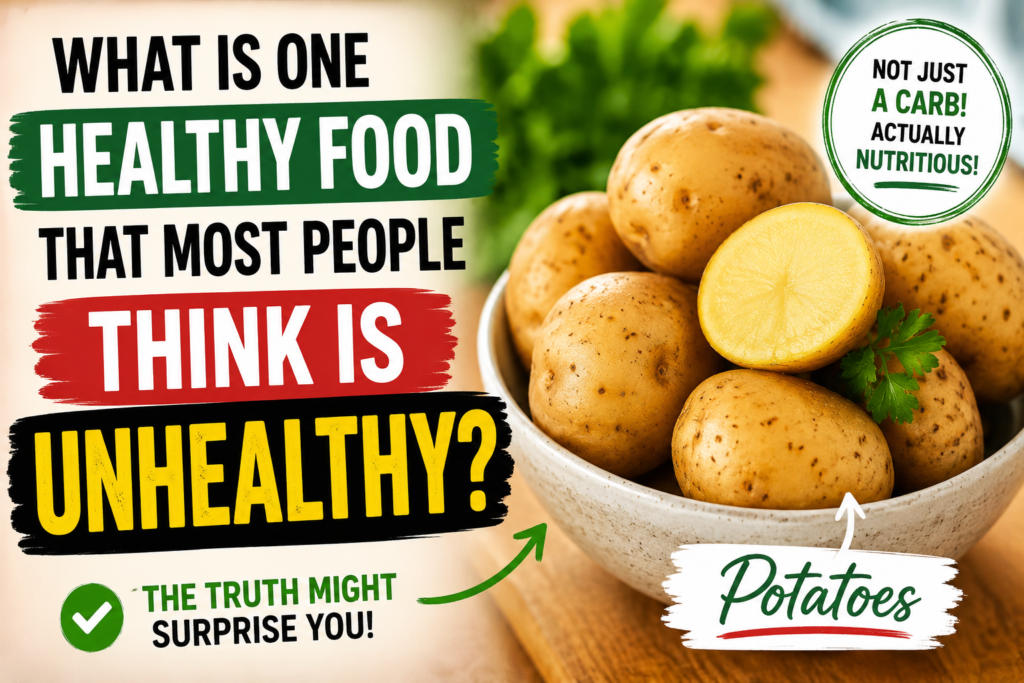
Healthy food people think is unhealthy is a phrase that perfectly describes potatoes. Despite their reputation, potatoes are one of the most nutritious whole foods you can eat. Their unhealthy image mostly comes from how they’re prepared—think French fries and potato chips—not from the potato itself.
If you’ve been avoiding potatoes because you believe they’re unhealthy, you may be missing out on one of nature’s most nutritious and affordable whole foods. Let’s explore why potatoes deserve a second look.

Why Are Potatoes the Healthy Food People Think Is Unhealthy?
When discussing a healthy food people think is unhealthy, potatoes are almost always mentioned because of common nutrition myths.
Potatoes became associated with unhealthy eating because many popular potato dishes are highly processed or deep-fried. Think about:
- French fries
- Potato chips
- Loaded baked potatoes
- Hash browns cooked in excessive oil
These foods contain added fats, sodium, and calories that don’t reflect the nutritional value of a plain potato.
The potato itself isn’t the problem – it’s the preparation.
Science Shows This Healthy Food People Think Is Unhealthy Is Actually Nutritious
Research continues to show that this healthy food people think is unhealthy provides essential vitamins, minerals, and fiber.
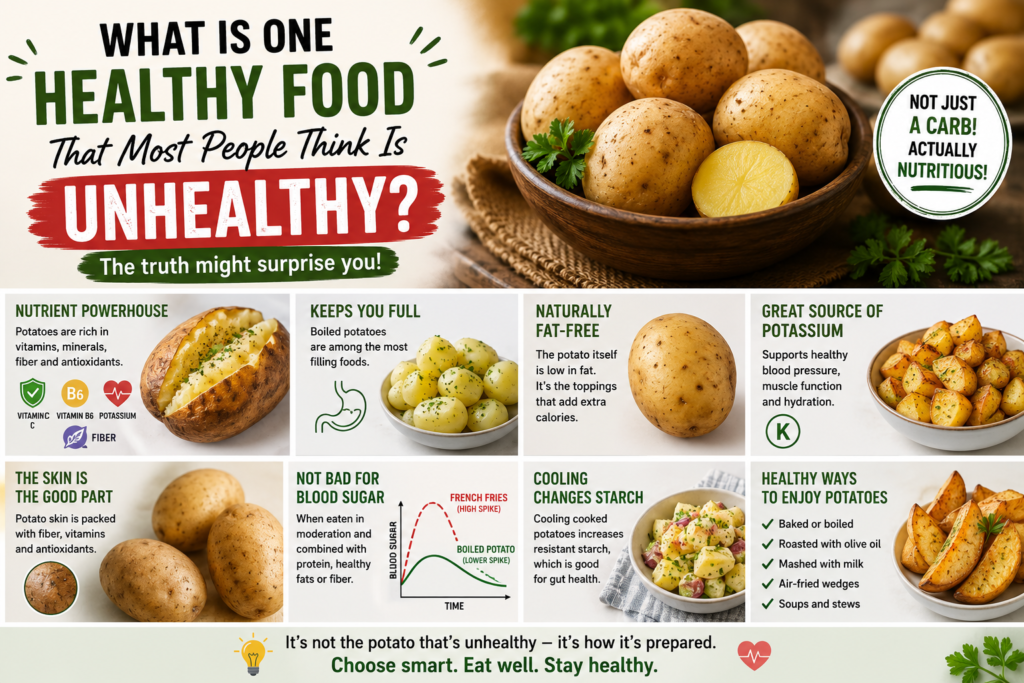
A medium baked potato with the skin contains several essential nutrients, including:
- Vitamin C
- Vitamin B6
- Potassium
- Magnesium
- Fiber (especially in the skin)
- Antioxidants
Potatoes also provide complex carbohydrates that fuel your muscles and brain.
Many athletes regularly eat potatoes because they help replenish glycogen stores after exercise.
They’re Surprisingly Filling
One of the biggest advantages of potatoes is their ability to keep you full.
Research on satiety has shown that boiled potatoes are among the most satisfying foods people can eat. Feeling full for longer may actually help reduce unnecessary snacking later in the day.
Instead of fearing potatoes, consider using them to replace ultra-processed snacks.
Potatoes Are Naturally Fat-Free
A plain potato contains almost no fat.
Most of the calories people associate with potatoes come from:
- Deep frying
- Butter
- Cheese
- Cream sauces
- Bacon
- Heavy toppings
A baked or boiled potato seasoned with herbs is an entirely different food from a large serving of fast-food fries.
They’re a Great Source of Potassium
Potassium helps support:
- Healthy blood pressure
- Muscle function
- Nerve signaling
- Fluid balance
Interestingly, potatoes often contain more potassium than bananas, making them an excellent choice for people looking to increase their intake.
The Skin Contains Valuable Fiber
Many people peel potatoes before cooking them.
Leaving the skin on adds:
- Dietary fiber
- Vitamins
- Minerals
- Antioxidants
Fiber supports healthy digestion and helps you stay satisfied after meals.
Just be sure to wash potatoes thoroughly before cooking.
Are Potatoes Bad for Blood Sugar?
This is where much of the confusion comes from.
Potatoes are relatively high in carbohydrates, meaning they can raise blood sugar levels. However, context matters.
Several factors influence how your body responds:
- Portion size
- Cooking method
- Whether they’re eaten with protein
- Whether they’re paired with healthy fats
- Individual metabolism
For example, eating a baked potato alongside grilled chicken and vegetables has a very different effect than eating a large serving of fries with sugary soda.
People with diabetes or other medical conditions should follow advice from their healthcare provider, but potatoes don’t need to be completely avoided by everyone.
Cooling Potatoes Changes Their Starch
Here’s an interesting fact.
When cooked potatoes are cooled, some of their starch becomes resistant starch.
Resistant starch behaves more like fiber and may help:
- Support gut bacteria
- Improve fullness
- Reduce the blood sugar response compared with freshly cooked potatoes
Foods like potato salad made with minimal dressing can contain more resistant starch than freshly baked potatoes.
Potatoes Are Budget-Friendly
Healthy eating doesn’t have to be expensive.
Potatoes are:
- Affordable
- Easy to prepare
- Widely available
- Long-lasting when stored properly
They’re one of the easiest ways to prepare nutritious meals on a budget.
Healthy Ways to Enjoy Potatoes
The key to enjoying this healthy food people think is unhealthy is choosing baked, boiled, or roasted preparations instead of deep-fried versions.
Instead of deep frying, try:
- Baked potatoes with Greek yogurt instead of sour cream
- Boiled baby potatoes with herbs
- Roasted potatoes with olive oil and rosemary
- Mashed potatoes made with milk instead of heavy cream
- Air-fried potato wedges
- Vegetable and potato soup
These options provide plenty of flavor without excessive calories.
Common Myths About Potatoes
Many myths have caused this healthy food people think is unhealthy to receive an unfair reputation.
Myth: Potatoes make you gain weight.
Weight gain results from consistently consuming more calories than your body needs. Potatoes themselves are not uniquely fattening.
Myth: Potatoes have no nutrients.
In reality, they’re packed with vitamins, minerals, and antioxidants.
Myth: Low-carb diets mean potatoes are unhealthy.
Low-carb eating is one dietary approach—not a universal rule. Many healthy eating patterns include potatoes in moderation.
The Bigger Picture
No single food determines your health.
A nutritious diet is built around:
- Fruits
- Vegetables
- Whole grains
- Lean proteins
- Healthy fats
- Reasonable portions
Potatoes can absolutely fit into this pattern when prepared thoughtfully.
Instead of labeling foods as “good” or “bad,” it’s often more helpful to look at your overall eating habits.
Final Thoughts
Potatoes prove that a healthy food people think is unhealthy can still be part of a balanced diet when prepared properly.
Potatoes are one of the healthiest foods that many people mistakenly believe are unhealthy. They’re naturally rich in vitamins, minerals, fiber, and complex carbohydrates while being low in fat and highly satisfying.
The real issue isn’t the potato -it’s the processing and preparation. Swapping deep-fried versions for baked, boiled, roasted, or air-fried potatoes lets you enjoy their nutritional benefits without the extra fat and sodium.
The next time someone says potatoes are unhealthy, remember that whole foods should be judged by their natural nutritional value – not by the less healthy ways they’re sometimes served. A simple baked potato can be a nourishing, affordable, and delicious part of a balanced diet.
Next time someone asks about a healthy food people think is unhealthy, you’ll know that potatoes deserve a place at the top of the list.
Scientific References
- USDA FoodData Central – Potatoes Nutrition Facts: https://fdc.nal.usda.gov/
- Harvard T.H. Chan School of Public Health – The Nutrition Source: https://nutritionsource.hsph.harvard.edu/
- NIH Office of Dietary Supplements – Potassium Fact Sheet: https://ods.od.nih.gov/factsheets/Potassium-Consumer/
- American Heart Association – Healthy Eating Resources: https://www.heart.org/
- Mayo Clinic – Healthy Carbohydrates: https://www.mayoclinic.org/healthy-lifestyle/nutrition-and-healthy-eating
Also Read
15 Proven Weight Loss Tips That Actually Work (Backed by Science)
Losing Just 80 Minutes of Sleep a Night Could Make You Gain Weight, New Study Finds (2026)