


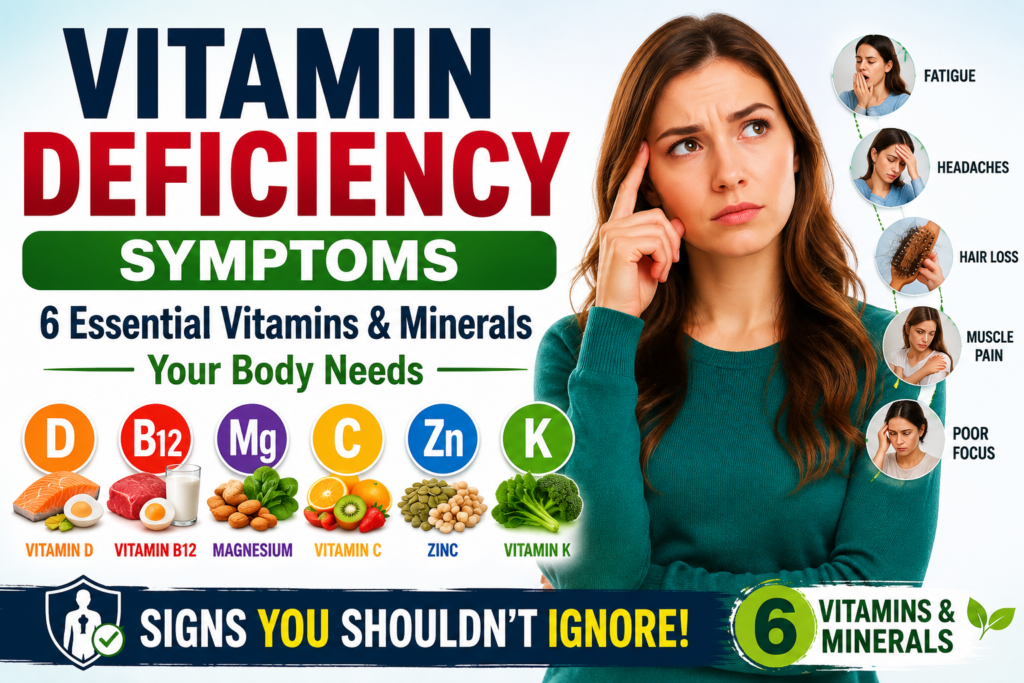
Vitamin Deficiency Symptoms: 6 Essential Vitamins & Minerals Your Body Needs
Vitamin deficiency symptoms can affect your energy, immune system, muscles, skin, and overall well-being. Recognizing vitamin deficiency symptoms early may help you identify potential nutritional gaps and discuss them with your healthcare provider.
Feeling tired, experiencing muscle cramps, noticing hair loss, or struggling with brain fog? While these symptoms can have many causes, they may sometimes be associated with vitamin or mineral deficiencies.
Your body depends on essential nutrients to support energy production, immune function, bone health, muscle function, blood clotting, and hundreds of biochemical processes. When you don’t get enough of certain vitamins or minerals over time, deficiency-related health problems can develop.
In this guide, we’ll explore the common symptoms, food sources, and ways to help maintain healthy levels of six important nutrients:
- Vitamin D
- Vitamin B12
- Magnesium
- Vitamin C
- Zinc
- Vitamin K
Important: Symptoms alone cannot diagnose a deficiency. If you’re concerned, consult a healthcare professional who may recommend appropriate testing.
Why Vitamin Deficiencies Matter
Vitamins and minerals support nearly every system in the body, including:
- Brain function
- Immune health
- Bone strength
- Muscle performance
- Healthy skin
- Blood cell production
- Wound healing
Deficiencies may develop due to:
- Poor diet
- Digestive disorders
- Certain medications
- Aging
- Pregnancy
- Limited sun exposure
- Vegan or vegetarian diets (for some nutrients)
Vitamin Deficiency Symptoms Linked to Vitamin D

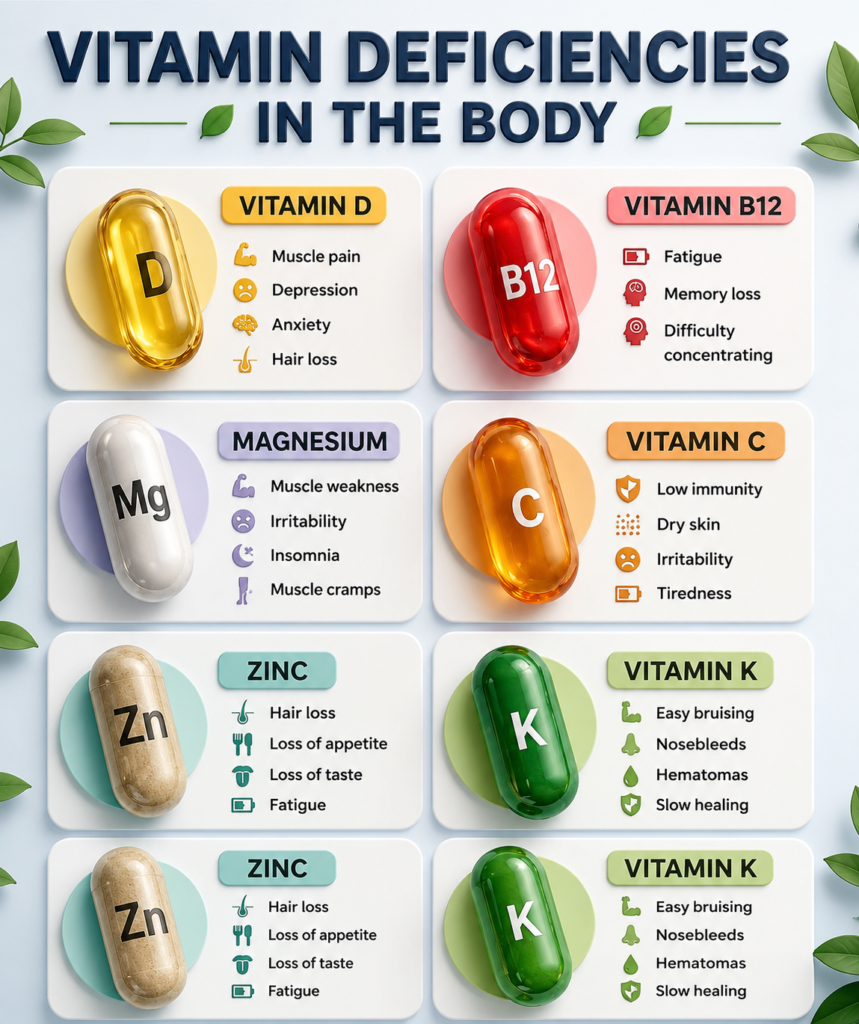
1. Vitamin D Deficiency Symptoms
Vitamin D helps regulate calcium absorption and supports healthy bones, muscles, and immune function.
Possible Symptoms
- Muscle weakness
- Bone discomfort
- Fatigue
- Low mood
- Hair thinning (in some cases)
People with low vitamin D levels may also experience increased risk of bone disorders if the deficiency becomes severe.
Good Food Sources
- Fatty fish
- Egg yolks
- Fortified milk
- Mushrooms exposed to UV light
- Fortified cereals
Sunlight exposure also helps your body produce vitamin D.
Among the most common vitamin deficiency symptoms, fatigue, weakness, and memory problems are often associated with inadequate vitamin B12 intake.
2. Vitamin B12 Deficiency Symptoms
Vitamin B12 is essential for healthy nerves, DNA production, and red blood cell formation.
Possible Symptoms
- Persistent fatigue
- Weakness
- Memory problems
- Difficulty concentrating
- Tingling in hands and feet
- Pale skin
Long-term deficiency may lead to nerve damage if left untreated.
Good Food Sources
- Fish
- Meat
- Eggs
- Dairy products
- Fortified breakfast cereals
Vegans often require fortified foods or supplements because plant foods naturally contain little or no vitamin B12.
Muscle cramps and poor sleep are vitamin deficiency symptoms that may sometimes be linked to low magnesium levels.
3. Magnesium Deficiency Symptoms
Magnesium supports over 300 enzyme reactions throughout the body.
Possible Symptoms
- Muscle cramps
- Muscle weakness
- Difficulty sleeping
- Irritability
- Fatigue
- Occasional headaches
Severe deficiency is uncommon but can affect heart rhythm and muscle function.
Good Food Sources
- Pumpkin seeds
- Almonds
- Cashews
- Spinach
- Black beans
- Whole grains
- Dark chocolate
Certain vitamin deficiency symptoms, including slow wound healing and bleeding gums, may be associated with inadequate vitamin C intake.
4. Vitamin C Deficiency Symptoms
Vitamin C supports immune function, collagen production, and wound healing.
Possible Symptoms
- Frequent illness
- Fatigue
- Dry skin
- Bleeding gums
- Slow wound healing
- Easy bruising
Severe vitamin C deficiency causes scurvy, which is rare in developed countries.
Good Food Sources
- Oranges
- Strawberries
- Kiwi
- Bell peppers
- Broccoli
- Tomatoes
Hair loss, reduced appetite, and changes in taste are vitamin deficiency symptoms that can occur when zinc intake is insufficient.
5. Zinc Deficiency Symptoms
Zinc supports immunity, wound healing, growth, and taste perception.
Possible Symptoms
- Hair loss
- Reduced appetite
- Changes in taste or smell
- Slow wound healing
- Frequent infections
Children and older adults may be more vulnerable to inadequate zinc intake.
Good Food Sources
- Oysters
- Beef
- Chicken
- Pumpkin seeds
- Chickpeas
- Lentils
- Dairy
Easy bruising and prolonged bleeding are vitamin deficiency symptoms that may be related to low vitamin K levels.
6. Vitamin K Deficiency Symptoms
Vitamin K is important for blood clotting and bone health.
Possible Symptoms
- Easy bruising
- Frequent nosebleeds
- Bleeding gums
- Slow clotting after cuts
Vitamin K deficiency is uncommon in healthy adults but may occur in people with digestive disorders or certain medical conditions.
Good Food Sources
- Kale
- Spinach
- Broccoli
- Brussels sprouts
- Cabbage
- Soybeans
Who Is More Likely to Develop Vitamin Deficiencies?
Some groups have a higher risk of deficiency, including:
- Older adults
- Pregnant individuals
- Vegans and vegetarians
- People with digestive disorders
- Individuals following highly restrictive diets
- Those with limited sun exposure
- People taking certain medications that affect nutrient absorption
Tips to Help Prevent Vitamin Deficiencies
Maintaining adequate nutrient intake starts with healthy daily habits:
- Eat a variety of colorful fruits and vegetables.
- Include lean proteins and whole grains.
- Consume healthy fats.
- Stay hydrated.
- Spend safe time outdoors for vitamin D.
- Discuss supplements with your healthcare provider if needed.
- Have regular health checkups if you’re at higher risk of deficiencies.
The best way to reduce the risk of vitamin deficiency symptoms is to eat a balanced diet rich in fruits, vegetables, whole grains, lean protein, healthy fats, and dairy or fortified alternatives. Regular health checkups and blood tests can also help identify nutritional deficiencies before they become serious.
When Should You See a Healthcare Professional?
Consider seeking medical advice if you experience:
- Persistent fatigue
- Unexplained muscle weakness
- Ongoing numbness or tingling
- Frequent infections
- Slow wound healing
- Unexplained bruising
- Significant hair loss
A healthcare professional may recommend blood tests to identify whether a vitamin or mineral deficiency is contributing to your symptoms.
Frequently Asked Questions
What is the most common vitamin deficiency?
Vitamin D deficiency is one of the most common nutrient deficiencies worldwide, although prevalence varies depending on age, location, and lifestyle.
What are the most common vitamin deficiency symptoms?
The most common vitamin deficiency symptoms include fatigue, muscle weakness, hair loss, brain fog, poor concentration, weakened immunity, muscle cramps, dry skin, slow wound healing, and easy bruising. These symptoms can have many causes, so medical evaluation is important for an accurate diagnosis.
Can vitamin deficiencies cause fatigue?
Yes. Fatigue can be associated with deficiencies of vitamin B12, vitamin D, iron, magnesium, and other nutrients. However, fatigue has many possible causes and should be evaluated if it persists.
Can I get all my vitamins from food?
Many people can meet their nutritional needs through a balanced diet. Some individuals, however, may require fortified foods or supplements based on their age, diet, medical conditions, or healthcare provider’s recommendations.
Are supplements necessary?
Not always. Supplements can be helpful for people with diagnosed deficiencies or increased nutritional needs, but they should ideally be used under medical guidance.
Final Thoughts
Vitamin deficiency symptoms can vary from mild fatigue to muscle weakness, poor concentration, slow wound healing, and hair loss. While these symptoms don’t always indicate a nutritional deficiency, they shouldn’t be ignored if they persist. Maintaining a balanced diet and consulting a healthcare professional when needed can help support long-term health and identify any underlying nutrient deficiencies.
Vitamin deficiency symptoms can sometimes be subtle and overlap with many other health conditions. Maintaining a balanced diet rich in fruits, vegetables, whole grains, lean proteins, and healthy fats is one of the best ways to support your nutritional health.
If you suspect you may have a deficiency, don’t rely on symptoms alone. Proper evaluation and laboratory testing by a healthcare professional can help determine the cause and guide appropriate treatment.
Scientific References
- National Institutes of Health (NIH) Office of Dietary Supplements – Vitamin D: https://ods.od.nih.gov/factsheets/VitaminD-HealthProfessional/
- NIH Office of Dietary Supplements – Vitamin B12: https://ods.od.nih.gov/factsheets/VitaminB12-HealthProfessional/
- NIH Office of Dietary Supplements – Magnesium: https://ods.od.nih.gov/factsheets/Magnesium-HealthProfessional/
- NIH Office of Dietary Supplements – Vitamin C: https://ods.od.nih.gov/factsheets/VitaminC-HealthProfessional/
- NIH Office of Dietary Supplements – Zinc: https://ods.od.nih.gov/factsheets/Zinc-HealthProfessional/
- NIH Office of Dietary Supplements – Vitamin K: https://ods.od.nih.gov/factsheets/VitaminK-HealthProfessional/
SEO Keywords: vitamin deficiency symptoms, vitamin deficiency signs, vitamin D deficiency symptoms, vitamin B12 deficiency, magnesium deficiency symptoms, vitamin C deficiency, zinc deficiency, vitamin K deficiency, essential vitamins, nutrition guide, healthy diet, vitamin deficiency causes.
Also Read
What Common Food or Drink Is Secretly Terrible for Your Health? The Surprising Truth (2026)
Healthy Food Most People Think Is Unhealthy: The Truth May Surprise You