
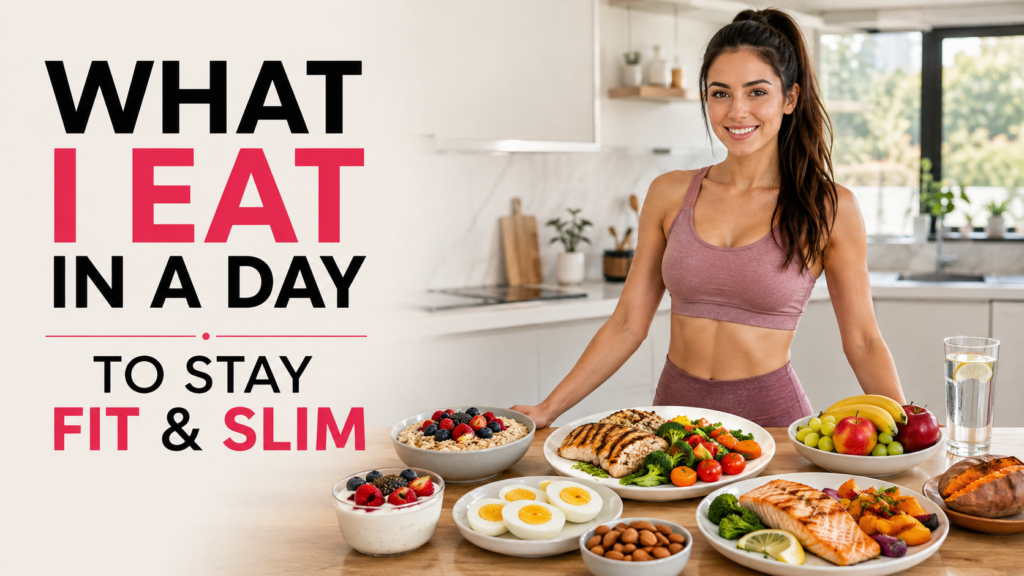
Staying fit and slim doesn’t mean surviving on salads, skipping meals, or completely avoiding carbohydrates. For me, the key is keeping my meals simple, filling, and nutritious while paying attention to portions.
I try to build most of my meals around protein, vegetables, fruit, whole grains, and healthy fats. This approach makes it easier to stay satisfied throughout the day without constantly thinking about snacks or processed foods.
The USDA’s MyPlate guidance similarly recommends eating a variety of fruits, vegetables, grains, protein foods, and dairy or fortified alternatives while choosing foods that are lower in added sugars, saturated fat, and sodium.
Here’s what a typical day of eating can look like for me.
Important: This is an example meal plan, not a personalized diet prescription. Your calorie and nutrient needs can be very different depending on your age, sex, height, weight, activity level, and health goals.
My Morning Routine
I start my day with water rather than immediately reaching for a sugary drink. Staying hydrated is an easy habit, and I generally prefer water, unsweetened tea, or black coffee.
For breakfast, I want something that gives me energy and keeps me full for several hours.
Breakfast: Oatmeal, Berries & Eggs
My typical breakfast is:
- ½ cup dry rolled oats
- 1 cup low-fat milk or unsweetened fortified milk
- ½ cup blueberries or strawberries
- 1 tablespoon chia seeds
- 2 boiled eggs
- Cinnamon for flavor
The oats provide carbohydrates and fiber, while the eggs provide protein. Berries add natural sweetness and micronutrients without requiring added sugar.
I also like chia seeds because a small amount adds fiber, fat, and texture to the meal.
Choosing whole grains is another simple strategy I use. USDA guidance recommends making at least half of your grains whole grains.
Approximate Breakfast Nutrition
| Nutrient | Amount |
|---|---|
| Calories | ~500 kcal |
| Protein | ~28 g |
| Carbohydrates | ~55 g |
| Fat | ~20 g |
| Fiber | ~9 g |
| Added sugar | ~0–3 g |
These numbers are approximate and depend heavily on the milk, oats, fruit, and egg sizes used.
Mid-Morning: Do I Need a Snack?
I don’t automatically snack just because it’s mid-morning.
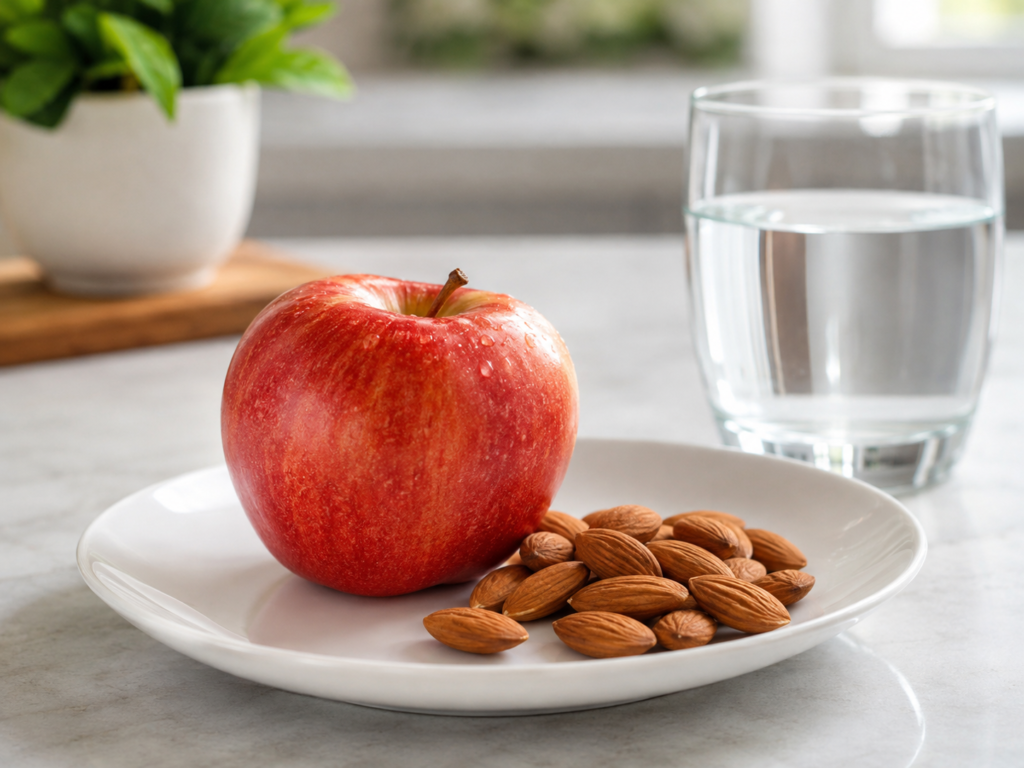
If I’m genuinely hungry, I’ll have something simple such as a piece of fruit, Greek yogurt, or a small handful of unsalted nuts.
One of my favorite combinations is:
1 apple + 10–12 almonds
The goal isn’t to eat as little as possible. It’s to choose something satisfying without turning a small snack into another full meal.
Approximate Snack Nutrition
| Nutrient | Amount |
|---|---|
| Calories | ~170 kcal |
| Protein | ~4 g |
| Carbohydrates | ~25 g |
| Fat | ~8 g |
| Fiber | ~5 g |
If I’m not hungry, I simply skip the snack.
Lunch: Protein + Vegetables + Whole Grains
Lunch is usually my biggest balanced meal.
A typical plate might contain:
- 120–150 g grilled chicken, fish, tofu, or another lean protein
- ¾ cup cooked brown rice or quinoa
- A large serving of mixed vegetables
- Salad greens
- Cucumber and tomatoes
- 1 teaspoon olive oil
- Lemon juice, herbs, and spices
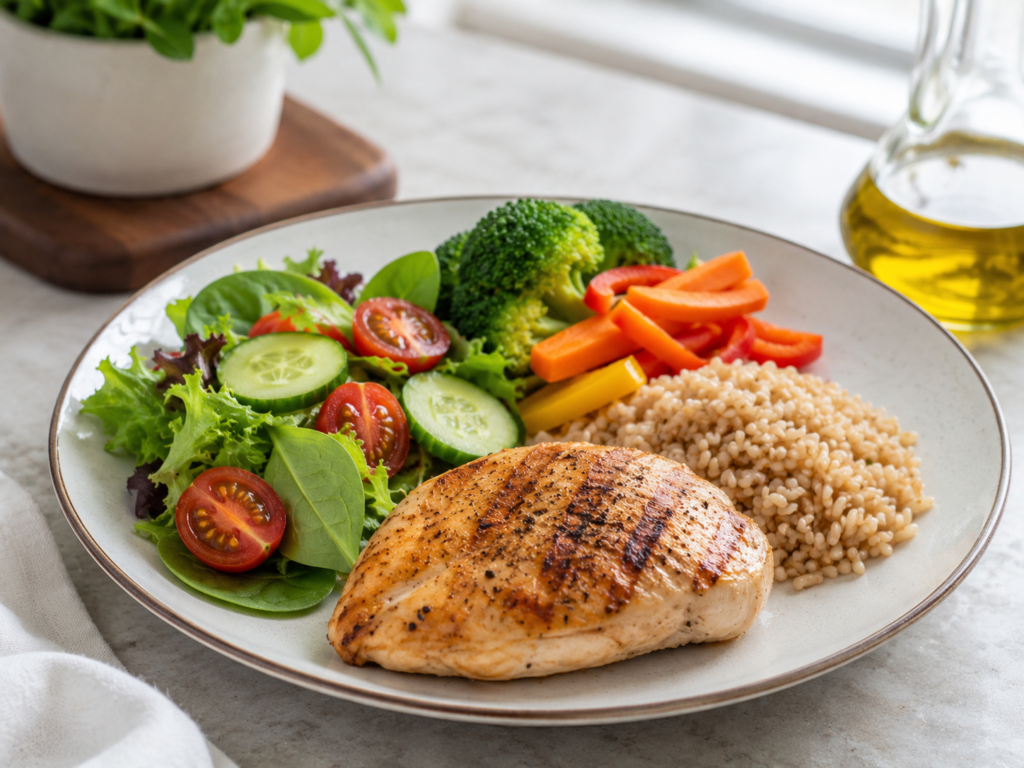
I try not to make vegetables an afterthought. Instead, I make them a major part of the meal.
This helps create a meal with plenty of volume without relying entirely on calorie-dense foods.
The USDA recommends varying vegetables and choosing a variety of colorful options. It also recommends including different protein sources such as seafood, beans, peas, lentils, nuts, seeds, soy products, eggs, and lean meats.
Approximate Lunch Nutrition
| Nutrient | Amount |
|---|---|
| Calories | ~550 kcal |
| Protein | ~40 g |
| Carbohydrates | ~55 g |
| Fat | ~17 g |
| Fiber | ~9 g |
| Added sugar | ~0–2 g |
I also pay attention to sauces and dressings because they can add a surprising amount of calories, sugar, or sodium to an otherwise healthy meal.
Afternoon: A Simple Snack
By afternoon, I may feel hungry again, especially if I’ve been active.
Instead of reaching for cookies, chips, or sugary drinks, I usually choose something containing protein and/or fiber.
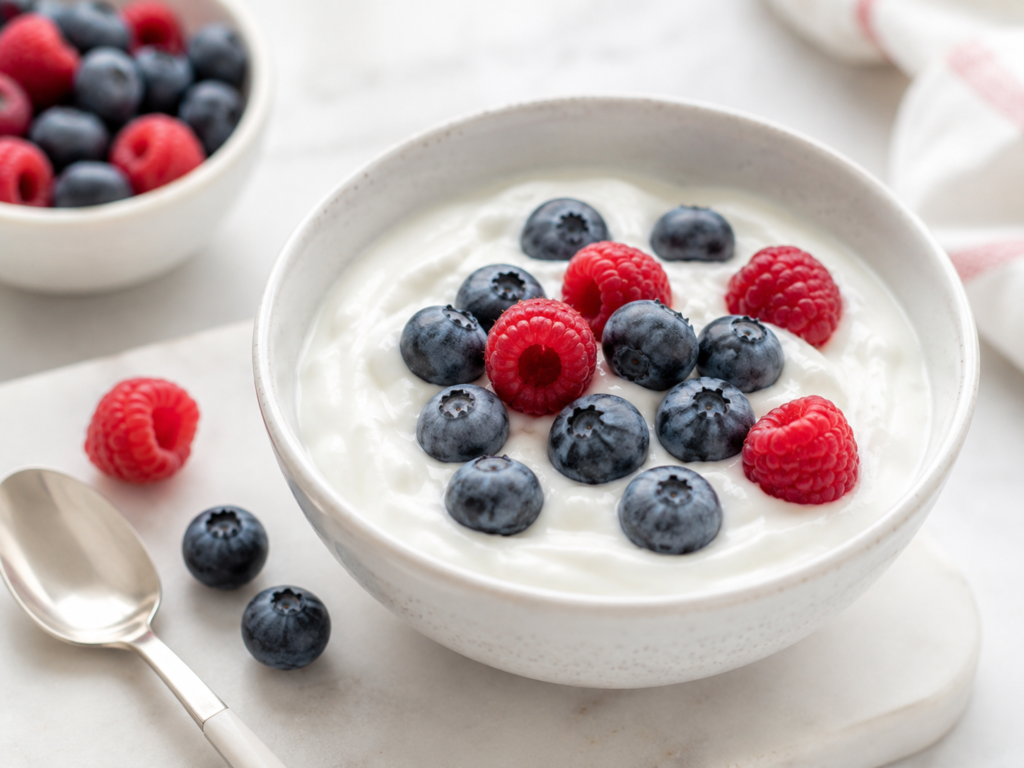
One easy option is:
Plain Greek yogurt + a small serving of berries
Another option is fruit with a small amount of peanut butter.
Approximate Snack Nutrition
| Nutrient | Amount |
|---|---|
| Calories | ~150 kcal |
| Protein | ~12 g |
| Carbohydrates | ~15 g |
| Fat | ~4 g |
| Fiber | ~2 g |
I don’t believe snacks need to be complicated. A few basic foods can work perfectly well.
Dinner: Keep It Filling but Balanced
Dinner is usually similar to lunch, but I often reduce the grain portion if I haven’t been very active that day.
A typical dinner could be:
- 120–150 g grilled fish, chicken, tofu, or beans
- 1 small roasted sweet potato
- 2 cups roasted or steamed vegetables
- Large green salad
- 1 teaspoon olive oil or another healthy fat
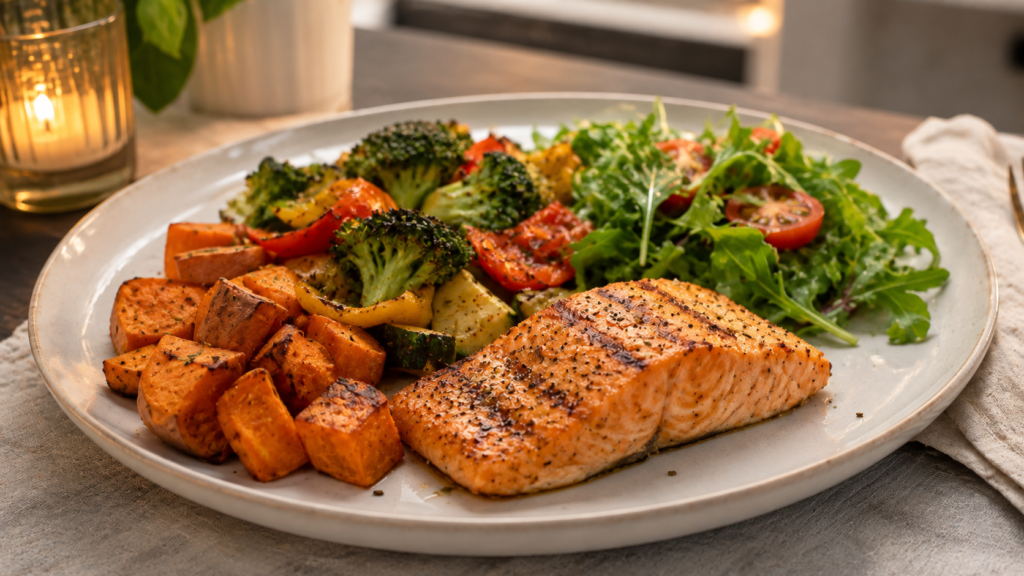
For example, grilled salmon with roasted vegetables and a small sweet potato is a simple dinner that provides protein, carbohydrates, fats, and plenty of vegetables.
I don’t completely eliminate carbohydrates at dinner. Foods such as oats, brown rice, potatoes, quinoa, fruit, and whole-grain bread can all fit into a balanced eating pattern.
The bigger consideration is usually overall portions and food quality, rather than declaring an entire food group “bad.”
Approximate Dinner Nutrition
| Nutrient | Amount |
|---|---|
| Calories | ~500 kcal |
| Protein | ~35 g |
| Carbohydrates | ~45 g |
| Fat | ~18 g |
| Fiber | ~10 g |
| Added sugar | ~0–2 g |
My Approximate Daily Nutrition Label
When I put the meals together, a sample day might look approximately like this:
Daily Nutrition Facts
Serving: 1 day
| Nutrient | Approximate Amount |
|---|---|
| Calories | 1,850–1,900 kcal |
| Total Fat | ~67 g |
| Saturated Fat | ~14 g |
| Carbohydrates | ~195 g |
| Dietary Fiber | ~35 g |
| Total Sugars | ~45–55 g |
| Added Sugars | ~5–10 g |
| Protein | ~115–120 g |
| Sodium | ~1,700–2,100 mg |
Percentages are not shown because individual calorie and nutrient requirements vary substantially.
This isn’t a magic “slim body” number. Someone who exercises heavily may need considerably more food, while another person may need less.
The important part is that the meals provide a combination of protein, fiber-rich carbohydrates, vegetables, fruits, and healthy fats.
What I Try Not to Do
I don’t try to be perfect.
Instead, I try to make healthy choices most of the time while leaving room for foods I genuinely enjoy.
Some habits I try to avoid include:
- Drinking sugary beverages throughout the day
- Eating highly processed snacks whenever I’m bored
- Making oversized portions a daily habit
- Skipping meals and then overeating later
- Treating desserts as completely forbidden
- Following extremely restrictive diets
USDA guidance recommends choosing nutrient-dense foods while limiting foods and beverages high in added sugars, saturated fat, and sodium.
My Simple Formula for Staying on Track
Rather than counting every calorie obsessively, I find it easier to think about my plate.
A simple formula is:
Protein + vegetables/fruit + high-quality carbohydrate + healthy fat
For example:
Chicken + vegetables + brown rice + olive oil
or
Eggs + whole-grain toast + fruit + avocado
or
Greek yogurt + berries + oats + chia seeds
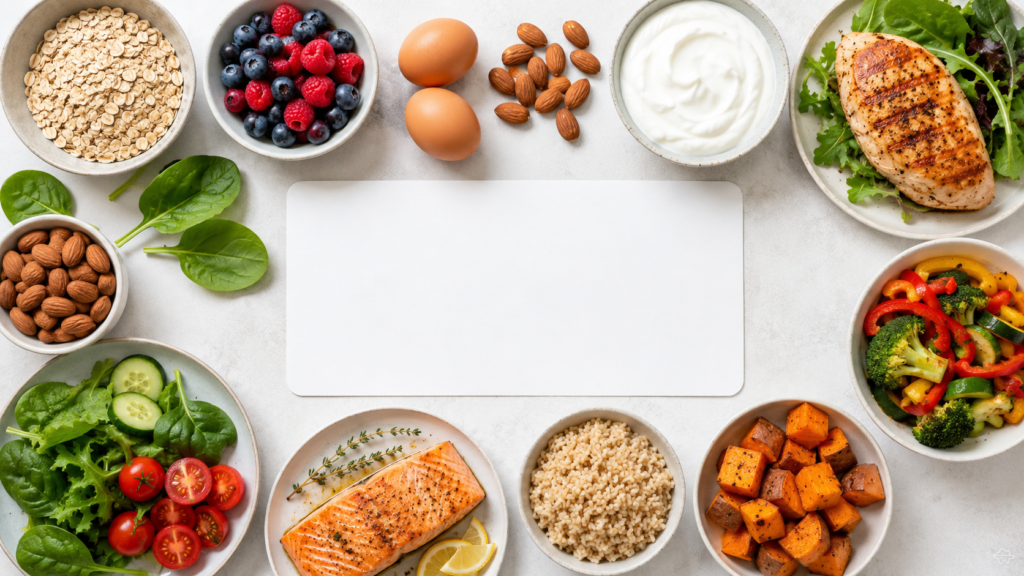
This gives me plenty of flexibility.
I can change the protein, vegetables, fruit, and carbohydrate depending on what’s available without completely changing the structure of the meal.
What About Treats?
I don’t believe that staying fit means never eating pizza, chocolate, ice cream, or other favorite foods.
If I want something sweet, I can have a reasonable portion and move on.
The bigger picture matters more than one meal.
A healthy eating routine is built from the foods you regularly eat over weeks and months—not from one perfect breakfast or one indulgent dinner.
The Bottom Line
My approach to staying fit and slim is relatively simple: eat mostly whole and minimally processed foods, prioritize protein and vegetables, include high-fiber carbohydrates, watch portions, stay hydrated, and remain physically active.
I don’t rely on a miracle food or completely eliminate carbohydrates or fats.
Instead, I focus on creating meals that are nutritious, filling, enjoyable, and realistic enough to repeat.
The best eating plan isn’t necessarily the strictest one. It’s the one that provides the nutrition your body needs while fitting realistically into your lifestyle.
And remember, being “slim” isn’t the only measure of health. Strength, energy, fitness, sleep, mental well-being, and overall nutritional adequacy matter too.
If you’re trying to lose weight, your calorie needs should be individualized rather than copied from someone else’s daily menu. For personalized advice—particularly if you have a medical condition, take medications, are pregnant, or have a history of disordered eating—consider speaking with a qualified healthcare professional or registered dietitian.
Also Read
Healthy Food Most People Think Is Unhealthy: The Truth May Surprise You
What Common Food or Drink Is Secretly Terrible for Your Health? The Surprising Truth (2026)